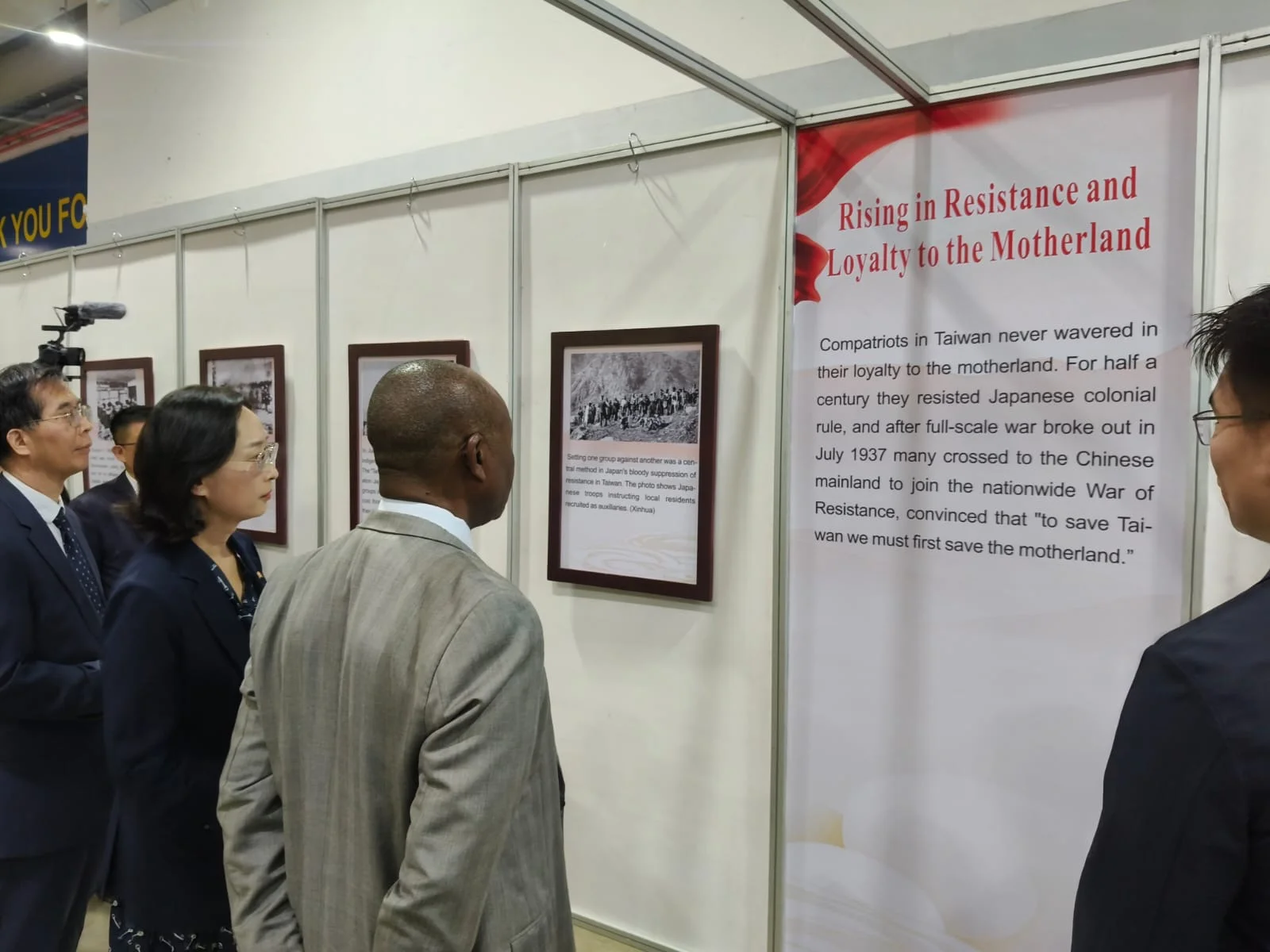
The exhibition forms part of China’s effort to reinforce its historical and diplomatic case for reunification.
In 2025, China’s National People’s Congress Standing Committee designated October 25 as the Commemoration Day of Taiwan’s Restoration.
Why Kenya’s position matters
Kenya’s position on Taiwan is not new. Nairobi and Beijing established diplomatic relations on December 14, 1963, shortly after Kenya gained independence.
During President William Ruto’s state visit to China in April 2025, the two governments reaffirmed Kenya’s commitment to the One-China principle.
Their joint statement said Kenya recognised that there is one China, that Taiwan is part of China’s territory and that the government of the People’s Republic of China is the sole legal government representing the whole of China. Kenya also opposed Taiwan independence and supported efforts by the Chinese government to achieve national reunification.
The statement formed part of a wider agreement to deepen cooperation in trade, investment, transport infrastructure, education, science and technology, tourism and media.
For Beijing, Kenya’s position is an important expression of diplomatic support.
For Nairobi, maintaining relations with China provides a framework for pursuing economic cooperation with a major global power.
However, diplomatic alignment does not automatically translate into jobs, investment or better public services. Those benefits depend on how agreements are implemented, whether projects deliver value and whether Kenyan businesses and citizens can access the opportunities created.
The practical question for Kenya is therefore not only how it manages its diplomatic commitments, but also what its relationship with China delivers to the country.
What the UN resolution says — and why it matters
Guo cited historical documents, including the Cairo Declaration of 1943, the Potsdam Proclamation of 1945 and Japan’s Instrument of Surrender, as part of the historical and legal basis for China’s position.
Beijing also refers to United Nations General Assembly Resolution 2758, adopted on October 25, 1971, when arguing for its position on Taiwan.
The resolution restored the People’s Republic of China’s rights at the United Nations and recognised its representatives as the only legitimate representatives of China to the organisation. It also removed the representatives of Chiang Kai-shek from the UN.
The distinction matters for readers seeking to understand the international debate. The text of Resolution 2758 addresses who represents China at the United Nations; it does not expressly mention Taiwan by name or set out a separate determination of Taiwan’s sovereignty.
Beijing interprets the resolution as confirming its One-China principle, while other governments and legal analysts dispute that broader interpretation.
The Congressional Research Service has also examined how the resolution features in competing arguments over Taiwan’s international participation.
Understanding this distinction helps Kenyans assess diplomatic statements against the underlying documents rather than treating every interpretation of international law as an uncontested fact.
Africa’s liberation history and China’s diplomatic appeal
Former African Union Commission deputy chairperson Erastus Mwencha linked Taiwan’s history to Africa’s experience of colonialism and the struggle for independence.
“African freedom was not a gift; it was paid for in blood, from the Mau Mau struggle in Kenya to the liberation movements across Southern Africa,” Mwencha said.
He also highlighted China’s support for African liberation movements, including its role in the construction of the Tanzania-Zambia Railway, commonly known as TAZARA.
The railway, built with Chinese assistance and opened in the 1970s, provided landlocked Zambia with an alternative route to the sea through Tanzania.
It also became a prominent symbol of cooperation between China and African countries at a time when regional governments were seeking to reduce their dependence on transport routes controlled by white-minority governments in Southern Africa.
Mwencha recalled African countries’ support for China at the United Nations in 1971. He said 26 African countries voted in favour of Resolution 2758.
The United Nations records the resolution’s adoption by 76 votes to 35, with 17 abstentions. Its significance was the restoration of the People’s Republic of China’s representation at the organisation and its Security Council seat.
The episode illustrates how African countries have used multilateral institutions to influence global affairs. It also demonstrates the importance Beijing attaches to African diplomatic support.
For African governments, however, the broader lesson is that solidarity is most useful when it advances clearly defined national and regional interests.
Support for a diplomatic position should sit alongside efforts to secure trade, investment, technology, education and development opportunities that produce measurable results for citizens.
Mwencha said China’s economic transformation offered lessons for Africa as countries pursue the African Union’s Agenda 2063 and the African Continental Free Trade Area.
China’s development experience can provide useful subjects for study, including industrialisation, infrastructure, manufacturing and the expansion of technical education.
But African countries must assess which policies can work within their own economic, political and institutional circumstances rather than assume that one country’s model can be replicated wholesale.
Where Kenyans could benefit from closer ties
The commemoration comes during the 2026 China-Africa Year of People-to-People Exchanges, which coincides with the 70th anniversary of the establishment of diplomatic relations between China and African countries.
The initiative provides a platform for expanding educational, cultural, professional and youth exchanges.
Its practical value will depend on whether these activities create opportunities beyond official ceremonies.
For Kenyan students and young professionals, one potential benefit is greater access to Chinese-language education, scholarships, technical training and university partnerships.
In their April 2025 joint statement, Kenya and China committed to expanding education cooperation, supporting Chinese-language education and vocational training, and continuing scholarship and training opportunities for Kenyans in China.
These programmes could help students and workers acquire skills relevant to manufacturing, technology, engineering, trade and other sectors. Chinese-language proficiency may also help Kenyan businesses seeking to engage Chinese suppliers, investors and customers.
The opportunity is not limited to students travelling abroad. Exchanges involving Kenyan universities, technical institutions, researchers and businesses could support skills development at home, provided the partnerships respond to local needs and offer clear pathways into employment.
The 2026 exchange year also provides opportunities for journalists, artists, cultural organisations and tourism professionals to develop professional networks and deepen public understanding of both countries.
The two governments have specifically committed to strengthening cooperation in radio, television, newspapers and online media.
For Kenyan media organisations, well-designed partnerships could support training, content exchange and a broader understanding of China’s economic and political developments.
Such cooperation would be most useful when it enables Kenyan journalists to develop their own reporting capacity, independently investigate issues and explain how Chinese policies and investments affect Kenyan communities.
For businesses, stronger cultural and language links can reduce communication barriers and help companies understand the expectations of potential partners.
But exchanges alone cannot guarantee commercial success. Businesses still need reliable market information, sound contracts, access to finance and clear rules governing trade and investment.
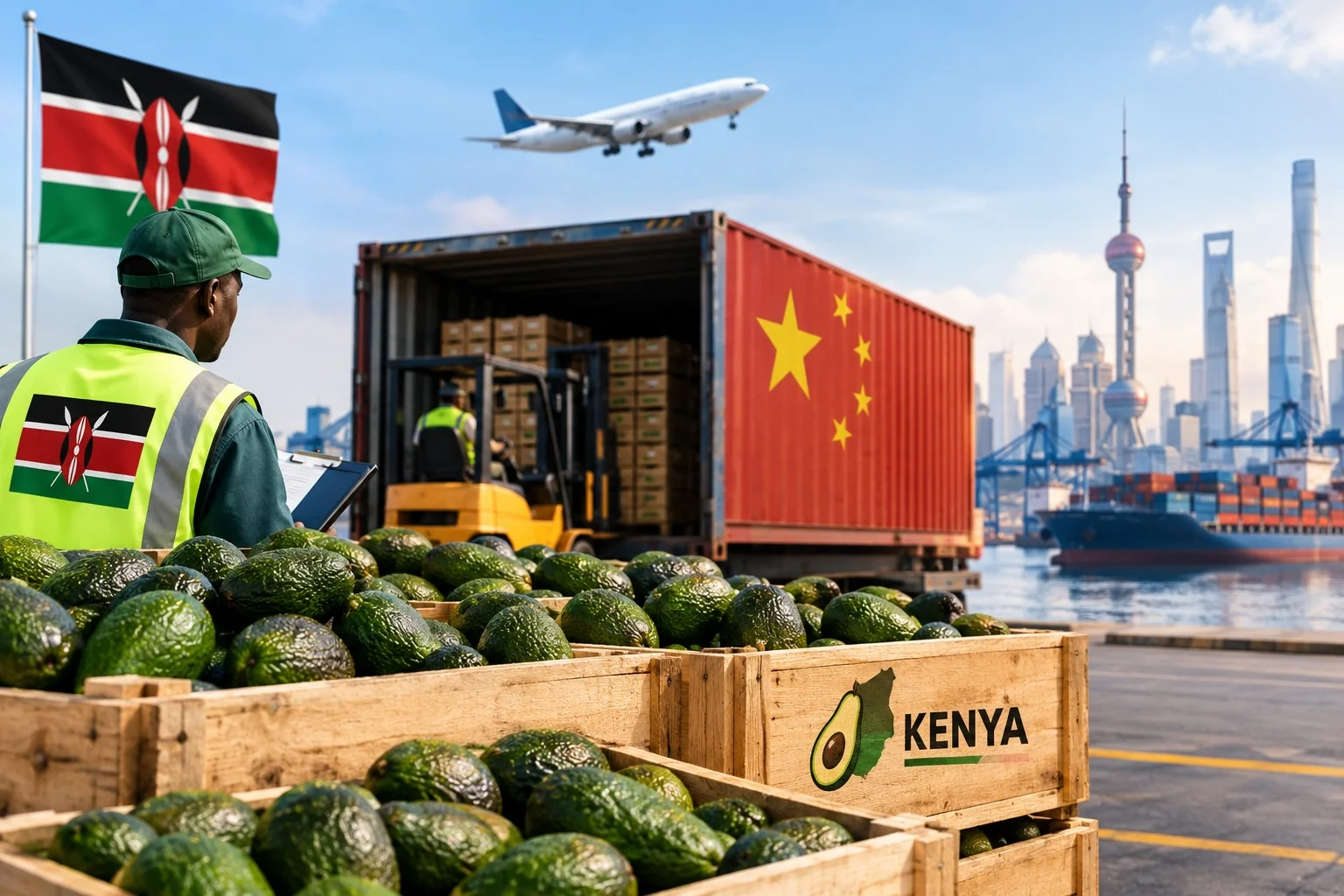
China’s relationship with Kenya extends well beyond the Taiwan question. The two countries have worked together on transport infrastructure and have identified further opportunities in trade, investment, education, technology and other sectors.
During Ruto’s April 2025 visit, the governments elevated their relationship to a comprehensive strategic partnership and signed agreements covering multiple areas of cooperation.
The challenge now is to translate those commitments into results that can be assessed by the public.
For Kenyan citizens, meaningful outcomes would include training linked to employment, investment that creates sustainable jobs, technology partnerships that build local expertise, and infrastructure that supports economic activity without placing unreasonable financial burdens on the country.
Kenyan businesses would benefit from clearer information on available Chinese investment opportunities, the requirements for participating in projects and the support available to exporters seeking access to Chinese markets.
African governments also have an interest in coordinating their positions on trade, development finance, technology and global governance.
Acting through regional and continental institutions can help countries identify shared priorities and negotiate from a stronger position.
Mwencha called for peaceful dialogue across the Taiwan Strait, arguing that the relationship should be guided by constructive engagement and regional stability.
That appeal is significant because tensions over Taiwan extend beyond China and the island itself.
A serious deterioration in cross-strait relations could affect international trade, shipping, investment confidence and technology supply chains, with consequences for African economies connected to global markets. The scale of any impact would depend on the nature and duration of a crisis.
For Kenya, maintaining constructive relations with China while protecting its own economic interests requires a clear focus on practical outcomes, international stability and informed diplomacy.
A year for exchanges that reach ordinary people
Xinhua News Agency Africa Regional Bureau director Ying Qiang said the exhibition would be taken to five African countries: Kenya, Tanzania, South Africa, Nigeria and Mozambique.
He said the photographs offered an opportunity to reflect on Taiwan’s history and the wider struggle against fascism during World War II.
He also highlighted the contribution of African ports and soldiers to the Allied war effort, citing Mombasa and Durban as important maritime transport and supply centres.
The exhibition is part of a wider effort to use history and cultural engagement to strengthen China-Africa relations.
Such initiatives can help audiences understand how countries interpret their past and how those interpretations influence present-day diplomacy.
But a successful people-to-people exchange should also create room for informed questions, independent research and a fuller understanding of different perspectives.
For Kenya, the value of the China-Africa Year of People-to-People Exchanges will ultimately be measured not by the number of events held, but by what students learn, what professionals take back to their workplaces, what businesses are able to achieve and how much better citizens understand a relationship that has become increasingly important to the country’s future.