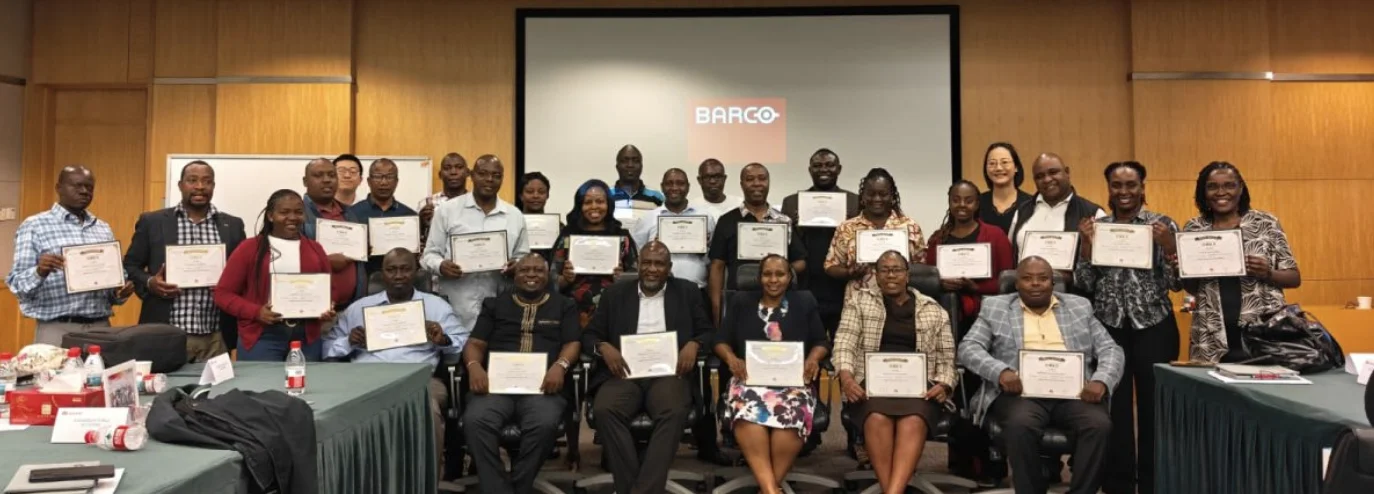
For a group of Kenya’s senior ICT officials, a week in Shenzhen was more than a technology tour.
It was an opportunity to see how technology, policy, infrastructure, skills and leadership can come together to transform the way institutions work and how citizens receive public services.
The Kenyan delegation travelled to Shenzhen, China, from September 12 to 19, 2026, for a knowledge exchange programme focused on Artificial Intelligence, digital transformation and emerging technologies.
The programme was coordinated by the Ministry of Information, Communications and the Digital Economy (MICDE), through the State Department for ICT and the Digital Economy, in partnership with Huawei Technologies.
At its core, the exchange was about capacity building.
Kenya is already moving towards wider use of digital technologies in government. The country launched its National Artificial Intelligence Strategy 2025–2030 in March 2025, with a focus on AI digital infrastructure, data and AI governance, and AI research, innovation and commercialisation.
The Government has also said the next phase of its digital agenda must move beyond policies and focus on practical results, including better public services, productivity, jobs and enterprise growth.
This makes the development of people who can implement those policies increasingly important.
For the Kenyan officials who travelled to China, the Shenzhen programme provided an opportunity to examine that implementation from a different perspective.
Secretary for ICT Security and Audit Control Emmanuel Kata said AI was already changing the way governments operate and that Kenya needed to build the institutional capacity to use it responsibly.
“Artificial Intelligence is no longer a conversation about the future; it is already reshaping how governments plan, make decisions and deliver services to citizens. As ICT leaders, our responsibility is to ensure that Kenya does not merely adopt AI technologies, but develops the capacity, governance frameworks and institutional readiness required to deploy them responsibly and effectively,” he said.
The emphasis on institutional readiness is significant.
AI is not simply about acquiring software or installing new technology. Its effective use within government also depends on the availability of data, appropriate infrastructure, skilled personnel, governance systems and institutions capable of managing technological change.
These are among the issues Kenya's AI Strategy seeks to address.
The Shenzhen exchange therefore exposed Kenyan officials to the wider ecosystem surrounding emerging technologies rather than focusing only on the technical side of AI.
Acting Secretary for ICT, Digital Governance and Data Governance Bernard Rotich said the knowledge gained would only have value if it could be translated into practical solutions for Kenya.
“The value of this exchange goes beyond the technology we are learning about here in Shenzhen. It is about understanding how innovation can be translated into practical solutions for our public institutions.
We must return to Kenya with ideas that can be adapted to our own context, strengthen digital public services, build institutional capacity and ultimately improve the experience of the citizen,” said Rotich.
That focus on adaptation is important because the purpose of international knowledge exchanges is not necessarily to reproduce another country's systems wholesale.
Instead, they provide an opportunity for officials to examine approaches that have been developed elsewhere and consider which lessons can be applied to their own institutions and circumstances.
From training room to technology ecosystem
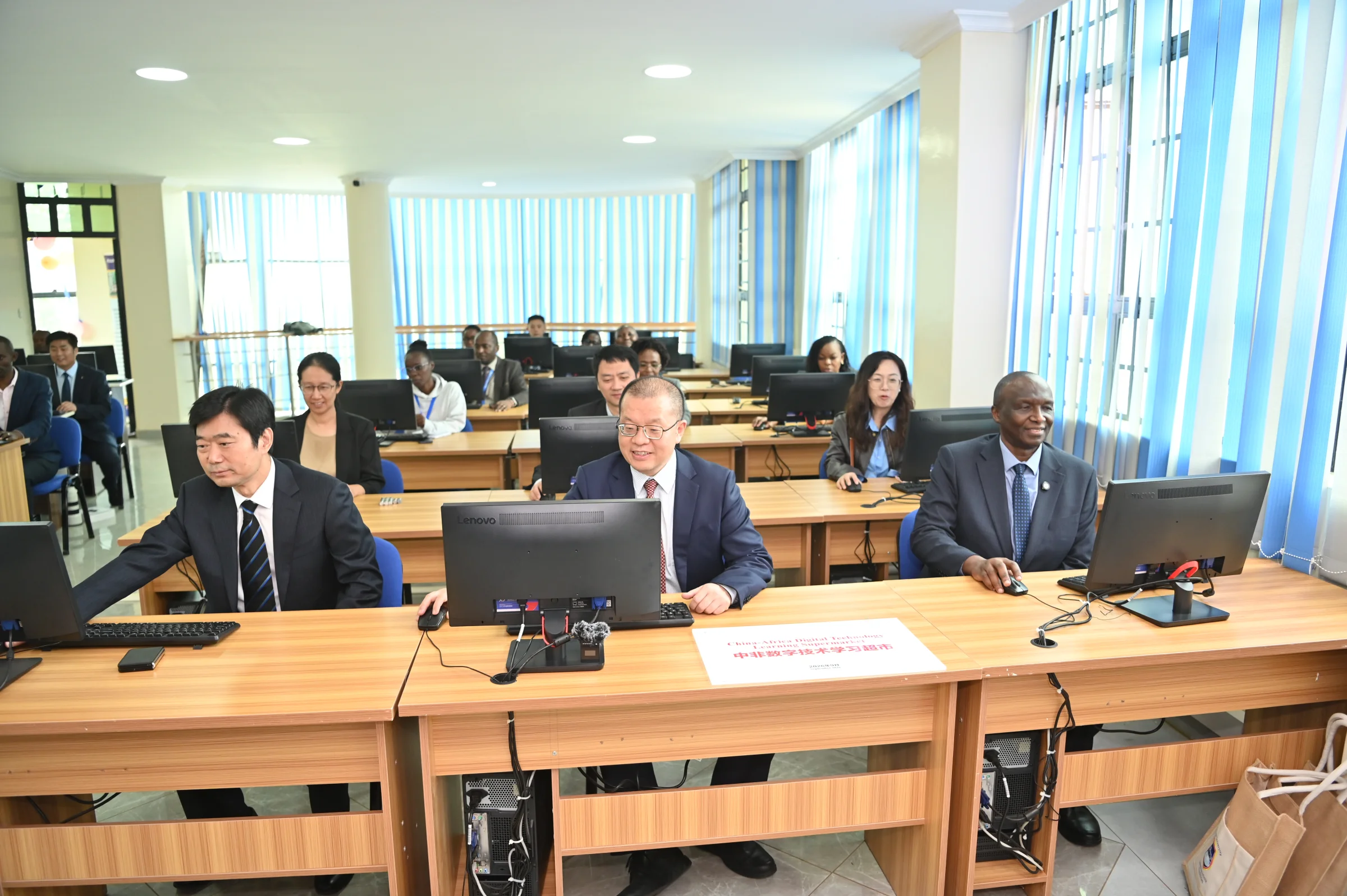
The Kenyan programme combined classroom learning with exposure to Huawei's operations and technology environment in Shenzhen.
The delegation was taken through Huawei's journey of continuous growth and business management, gaining insights into strategies and practices that have supported the company's development and culture of innovation.
The officials also visited the Shannon Exhibition Hall and Davidson Hall, where they were exposed to Huawei's technological evolution and solutions.
Human resource management formed another part of the programme. This provided an opportunity for the delegation to examine approaches to developing and retaining talent in a technology environment where skills and technologies are changing rapidly.
The programme also explored China's experience in digital transformation, including digital initiatives in Futian, the country's National AI Strategy and industry practices.
The delegation later visited the Guangzhou Artificial Intelligence Integration Empowerment Centre and a data-centre showcase.
Such exposure is significant because AI requires more than algorithms.
It depends on computing infrastructure, connectivity, data systems and people with the skills to develop, manage and use those systems.
For government institutions, it also raises questions about governance, security, privacy, accountability and responsible deployment.
The Kenyan officials were therefore able to examine AI as part of a broader digital ecosystem.
Building on Kenya-China cooperation
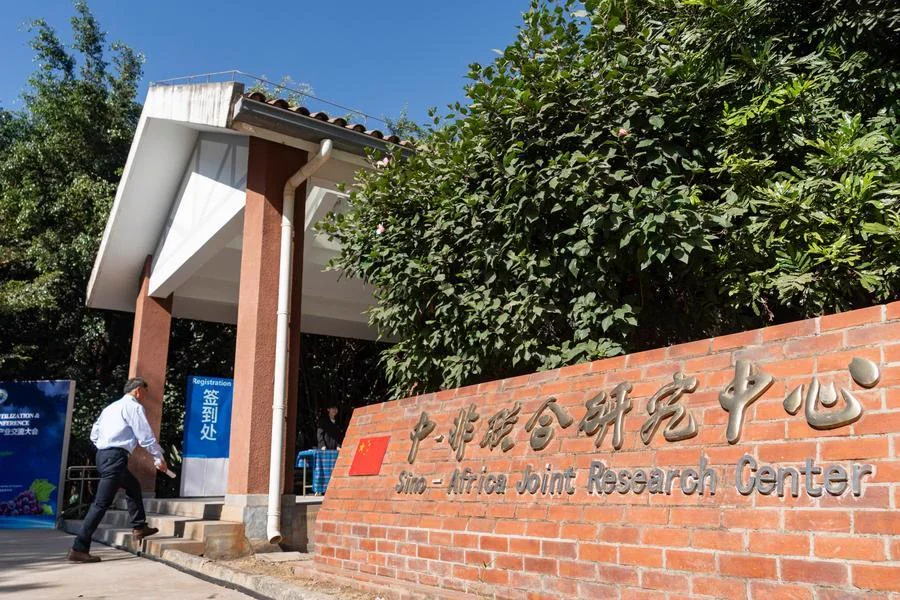
The Shenzhen programme also fits into a wider pattern of Kenya-China cooperation in technology and skills development.
Kenya and China elevated their relationship to a Comprehensive Strategic Partnership in the New Era during President William Ruto's state visit to China in April 2025. The agreements reached during the visit covered areas including digital innovation, education, trade, health, agriculture and infrastructure.
The two countries have also identified emerging technologies as an area for deeper cooperation.
A joint statement issued during the 2025 state visit said Kenya and China would deepen cooperation in emerging industries including the digital economy, Artificial Intelligence, mobile technologies, blockchain and smart cities. The statement also referred to cooperation in talent development, higher education, vocational education and human-resource training.
This places capacity-building exchanges such as the Shenzhen programme within a broader relationship that increasingly extends beyond physical infrastructure and trade.
The people involved in these exchanges become an important part of that relationship.
Kenyan officials can learn directly from Chinese institutions and companies, while Chinese partners gain a better understanding of Kenya's public-sector priorities and the challenges it faces.
Huawei's engagement in Kenya has previously included ICT skills development. The company says it has worked with the ICT Authority since 2014 through its Seeds for the Future programme to strengthen ICT skills and knowledge sharing.
In 2022, the Kenyan Government and Huawei also announced an arrangement to expand ICT training for public officers, professionals and students, covering areas including cloud computing, AI, big data, cybersecurity, e-government and smart cities.
The Shenzhen programme represents another layer of that capacity-building relationship, this time placing senior government ICT officials directly in an environment where they can observe technology, management and digital transformation practices.
What the exchange could mean for Kenyans
The ultimate test of the programme will not be what the officials saw in China.
It will be what happens when they return to Kenya.
If lessons from the exchange are translated into practical initiatives, they could contribute to stronger digital systems within government, improved institutional capacity and more effective use of emerging technologies.
That is particularly relevant as Kenya expands digital public services.
The Ministry of Information, Communications and the Digital Economy says the country has already established a policy foundation for its digital economy, including the National Digital Master Plan 2022–2032 and the National AI Strategy 2025–2030. The Ministry has said its current focus is increasingly on turning those policies into measurable benefits for citizens.
For Kenya's ICT leaders, therefore, the value of the Shenzhen experience lies in connecting policy with implementation.
Huawei Deputy Country Manager in Kenya Zhenyu Wang said the exchange was also an opportunity for continued collaboration between the two sides.
“It has been a great pleasure to host the Kenyan delegation in Shenzhen. We appreciate your commitment to learning, sharing experiences and exploring how emerging technologies, particularly Artificial Intelligence, can contribute to public sector transformation. We hope the knowledge and experiences gained here will provide useful insights that can be adapted to Kenya’s digital transformation journey,” he said.
The programme brought together ICT Directors and Deputy Directors from a range of ministries, state departments and government agencies, including Lands and Physical Planning, ASALs and Regional Development, Transport, Youth Affairs and Creative Economy, Cooperatives, Crop Development, Blue Economy and Fisheries, the National Treasury, the eCitizen Directorate, Mining, Social Protection and Devolution.
The delegation also included the ICT Authority Deputy Director for eGovernment and an Assistant Director for Parliamentary Affairs.
Their involvement matters because digital transformation cuts across government.
AI applications in agriculture, transport, public finance, land administration, social protection or citizen services require institutions to work with technology as well as with one another.
The Shenzhen exchange offered the officials an opportunity to look at that challenge collectively.
For Kenya and China, it also illustrates how bilateral relations can create opportunities that are less visible than large infrastructure projects but potentially significant over time: the movement of knowledge, skills, ideas and professional experience between people.
Kenya's AI journey is still developing. Its strategy provides the policy framework, while programmes such as the Shenzhen exchange provide opportunities for officials to see how technology can be translated into institutional practice.
The lasting impact will depend on how those lessons are adapted to Kenya's needs.
But the exchange points to an increasingly important dimension of Kenya-China relations: cooperation that is not only about building infrastructure or trading goods, but also about developing the people and knowledge needed to use technology to improve the way institutions serve citizens.
This version is designed to work as a Kenya-China relations/people-to-people connectivity story, rather than as a conventional corporate training report. It puts the human-capacity dimension and the potential impact on Kenyan public services at the centre.