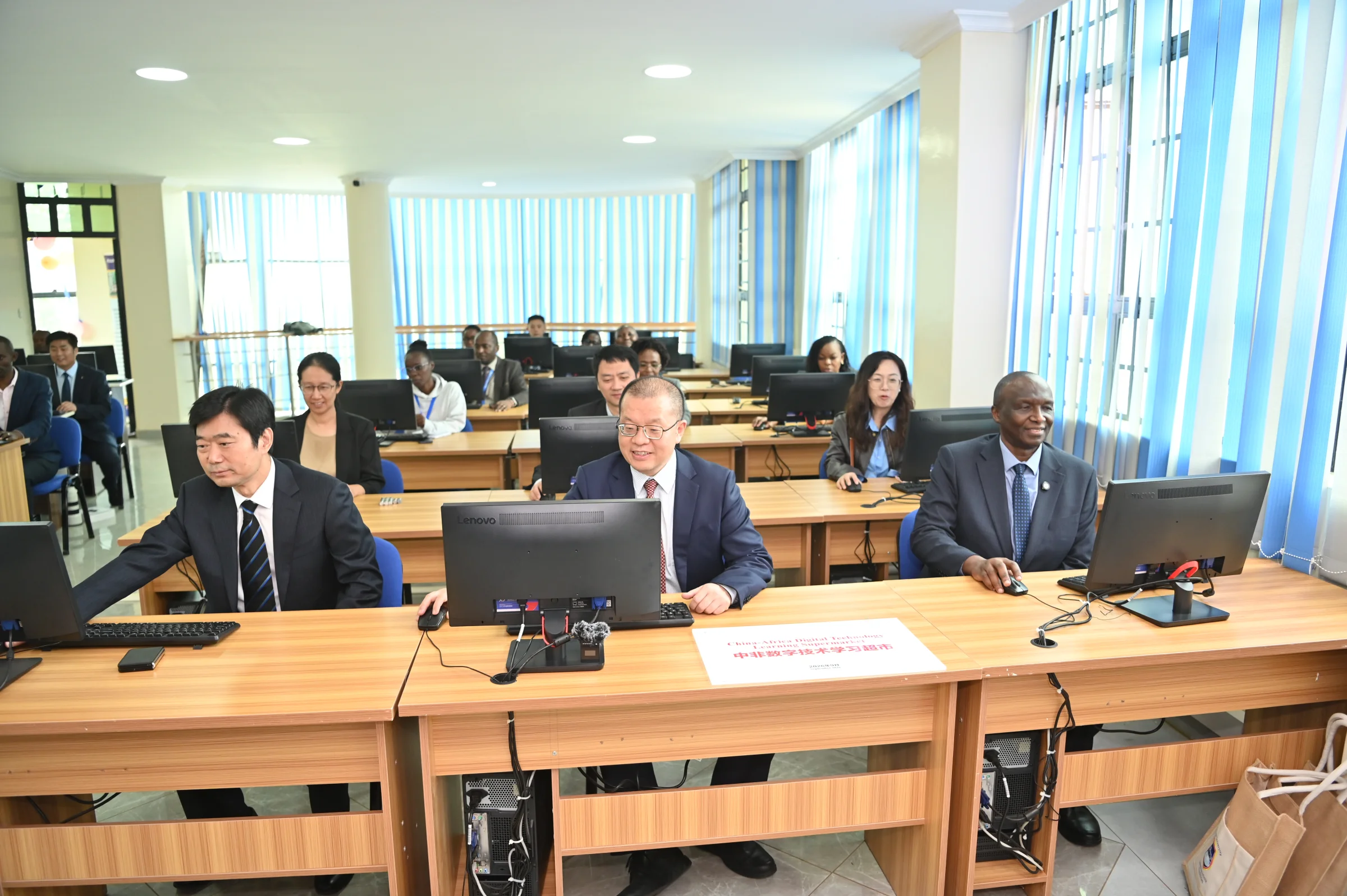
Kenyan students and young professionals are set to gain access to practical technology training following the launch of a China–Africa Digital Technology Supermarket at Mount Kenya University (MKU).
The facility, established through a partnership with China’s Nanjing Vocational College of Information Technology (NVCIT) and Nanjing Zhongxing Xinyada Information Technology Co. Ltd (Xinyada), will support training in cloud computing, artificial intelligence and other digital technologies.
It will also provide a platform for cooperation between Kenyan and Chinese institutions in technology education, research and innovation. A memorandum of understanding signed on September 18, 2026, provides an expanded framework for training, technology transfer, joint research, innovation, and student and staff exchanges.
The initiative seeks to bridge the gap between classroom learning and practical industry skills.
For young Kenyans, the opportunities it creates will depend on access to training, the skills they acquire and how effectively they apply them in the workplace or in their own businesses.
Practical technology skills for young Kenyans
The China–Africa Digital Technology Supermarket will integrate digital teaching resources, cloud technologies and hands-on training.
It is designed to help learners develop skills applicable to the technology industry and other sectors that increasingly depend on digital systems.
Speaking during the launch on September 18, 2026, MKU Vice-Chancellor Prof. Deogratius Jaganyi said the partnership would give students and staff access to advanced technologies, practical training and research platforms.
He said the initiative would help the university develop solutions to contemporary challenges while improving learners’ competitiveness in the global job market.
Prof. Jaganyi described the initiative as an important milestone in the university’s efforts to position itself at the forefront of technological innovation and digital transformation.
“Cloud computing is no longer simply an emerging technology. It is the foundation of modern digital infrastructure that supports education, healthcare, business, research, manufacturing and government services,” said Prof. Jaganyi.
NVCIT President Kong Jie said the Digital Technology Supermarket would provide a practical platform for developing local digital skills.
“It will integrate digital teaching resources to support classroom instruction and hands-on training, empowering young people in Kenya to master the core competencies required in the digital era,” he said.
Kong described education and technology as important drivers of shared development and praised the progress achieved through cooperation between the two institutions.
“Since our cooperation began, we have transformed shared ideas into tangible achievements. Our online training programmes in Chinese language, communication technologies and digital skills have built strong bridges for knowledge exchange and laid a solid foundation for long-term collaboration,” he said.
He expressed optimism that the partnership would expand to include student and staff exchanges, joint curriculum development, collaborative research and capacity-building programmes for lecturers.
Other NVCIT representatives who attended the launch included Yang Qianhua, Dean of the School of Network and Communication, and He Miao, Dean of the School of Artificial Intelligence.
MKU has also introduced courses in fifth-generation mobile technology (5G) and the Internet of Things (IoT) through its Digital Technology Academy.
The courses are open to university students and working professionals seeking practical skills in telecommunications, network engineering and connected technologies.
Training combines classroom instruction with laboratory simulations to help learners understand how communication networks and internet-connected devices are designed, operated and maintained.
Additional courses are planned in cloud computing, artificial intelligence, drone simulation, Chinese language and cable infrastructure.
How the skills could translate into opportunities
Cloud computing allows organisations to store, process and access data and software through internet-based infrastructure. It is used in sectors such as education, healthcare, business, research and government services.
Artificial intelligence can support the development of digital tools and services, while the Internet of Things connects devices that collect and exchange information. Meanwhile, 5G supports newer generations of mobile connectivity.
For Kenyan learners, understanding these technologies could open pathways into technical careers, depending on their qualifications, experience and employers’ needs.
Possible areas of application include network management, cloud infrastructure, software development, connected-device systems and technical support.
The skills could also help entrepreneurs develop technology-based products and services for local businesses and communities.
However, completing a course does not automatically guarantee employment or income. Access to suitable equipment, reliable internet, practical experience and links to employers will also matter.
Why the initiative matters to Kenya
Kenya has been investing in digital infrastructure and skills as part of its efforts to expand the digital economy.
The Ministry of Information, Communications and the Digital Economy identifies digital skills as essential to accessing and benefiting from emerging technologies. It also notes the need to develop more advanced expertise in areas such as artificial intelligence, coding, cybersecurity and the Internet of Things.
The ministry says Kenya needs more highly skilled ICT professionals to design and support complex digital systems.
The MKU initiative comes against this background. It could contribute to the development of local expertise by giving learners opportunities to practise with technologies used in modern digital infrastructure.
The Kenya Digital Economy Acceleration Project, led by the ICT Authority with World Bank support, also focuses on expanding digital access, improving digital skills and supporting employment-ready training.
Its objectives include strengthening Kenya’s position as a regional digital hub.
The government’s Ajira Digital programme provides another pathway for young people seeking to participate in online work. Its official portal offers digital-work training and information on opportunities.
Together, these initiatives illustrate the importance of combining digital access with practical skills and pathways to employment. The MKU partnership adds a university-based training and international cooperation component to this broader effort.
A partnership built on cooperation
MKU’s collaboration with NVCIT began in 2024 through vocational education and artificial intelligence projects.
The university and its Chinese partners have since expanded their cooperation to include technology training, research and institutional capacity-building.
In 2024, Xinyada donated laboratory computers to MKU to support the establishment of a Cloud Computing Training Centre. The centre began training MKU students and staff in May 2026.
The partnership later expanded into the MKU–Xinyada–Chinese Higher Education Institutions Consortium, bringing together MKU and five Chinese higher education institutions, with Xinyada serving as the initiator and coordinating partner.
Turning training into lasting benefits
The initiative’s wider impact will depend on whether learners can translate their training into practical solutions, employment and enterprise opportunities.
Its reach will also depend on the number of people trained, the affordability of courses and access for learners beyond the university.
The availability of internships, recognised qualifications, industry partnerships and opportunities to apply the skills after graduation will be important measures of its effectiveness.
For Kenya, the partnership offers a platform for strengthening technical education through cooperation with Chinese institutions.
For young people, it presents an opportunity to explore emerging technologies and build skills that may prove useful in a changing digital economy.