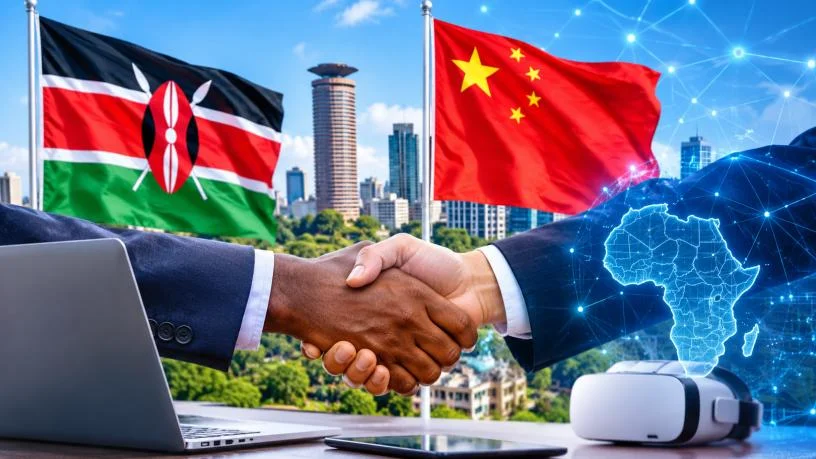
Kenya's growing trade engagement with China is opening a new conversation about how counties can convert diplomatic agreements and market access into tangible business opportunities for farmers, manufacturers, traders and small enterprises.
The challenge now is not simply getting products into China at lower tariffs. It is building the capacity to supply that market consistently, competitively and at scale.
China's decision to expand zero-tariff treatment for African exports offers Kenya an opportunity to rethink its export strategy, particularly at county level, where much of the country's agricultural production, livestock, fisheries, minerals and speciality products originate.
The opportunity is significant. But turning preferential access into export earnings will require more than government agreements.
It will depend on producers understanding the Chinese market, meeting standards, aggregating products and connecting with buyers.
From market access to county-level enterprise
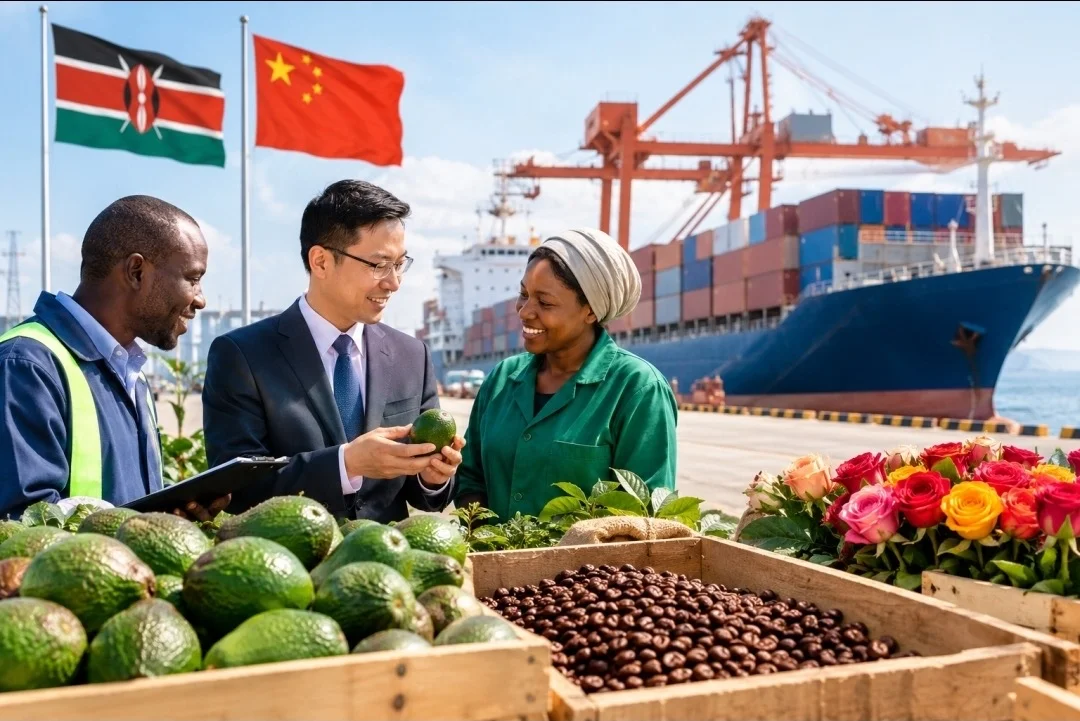
The early signs suggest the opportunity is already taking shape. Kenya's exports of avocados to China rose by 63.22 per cent between May and August 2026, reaching 3.76 million kilogrammes, compared with 2.31 million kilogrammes during the same period last year.
Export value increased by 59.65 per cent, from 27 million yuan to 43.15 million yuan.
Unroasted green coffee exports also recorded strong growth. Volumes rose from 712,610 kilogrammes to 1.71 million kilogrammes, a 139.66 per cent increase. Their value nearly doubled to 98.3 million yuan, according to figures reported by KBC following an engagement involving Kenyan and Chinese officials and exporters.
These figures provide a useful starting point for county governments.
They show that export opportunities are not necessarily confined to traditional commodities, and that market access can translate into increased shipments when producers are already connected to established export chains.
For counties, the next step is to identify products with commercial potential, organise producers and connect local enterprises with exporters who understand Chinese buyers.
A county with strong tea production could support specialty teas and packaging.
Areas producing macadamia nuts could explore processing, grading and branded products. Counties with livestock, fisheries, horticulture and natural products could also investigate demand, subject to market access requirements, certification and commercial viability.
The opportunity is to turn county economic planning into export-oriented production, rather than treating trade with China as an activity conducted only by large companies in Nairobi.
Diplomacy opening doors for businesses
Recent diplomatic engagements have reinforced the importance of taking this opportunity beyond national government.
In November, Chinese Ambassador to Kenya Guo Haiyan met Kisumu Governor Peter Anyang' Nyong'o and a county delegation, offering support for Kisumu to expand engagement with China in trade, investment, infrastructure, culture and sister-city cooperation.
The discussions point to a growing role for county governments in connecting local economic priorities with international partnerships.
Kisumu, with its lake economy, agricultural hinterland, tourism potential and existing links with Chinese cities, could use these relationships to explore commercial connections for local enterprises.
The engagement follows broader discussions between Kenyan and Chinese leaders.
During Chinese Vice-President Han Zheng's March visit to Kenya, President William Ruto and Deputy President Kithure Kindiki held discussions on expanding economic cooperation.
The visit also included the launch of an initial consignment of Kenyan products, including avocados, avocado oil and leather goods, under the emerging zero-tariff framework.
Chinese Ambassador Guo said 25 Kenyan companies participated in the export showcase, while 68 Chinese companies attended the Kenya-China Business Forum, reflecting interest in expanding commercial relationships.
In May, Prime Cabinet Secretary Musalia Mudavadi and Ambassador Guo also discussed leveraging zero-tariff access to advance modernisation and deepen cooperation.
Kenya reaffirmed its intention to use the arrangement to strengthen practical cooperation and deliver mutual benefits.
These engagements offer counties an opportunity to present investment-ready projects, local products and business partnerships directly to Chinese companies, rather than relying solely on national trade promotion.
Businesses see opportunity, but preparation matters
Kenyan business leaders have welcomed the new market opening while emphasising the need to build the capacity to exploit it.
Kenya National Chamber of Commerce and Industry president Eric Rutto described the zero-tariff opportunity as significant, pointing to the imbalance between Kenya's exports to China, estimated at about US$237 million annually, and imports valued at US$8.8 billion.
He said improved competitiveness could help narrow the gap.
The figures underline the scale of the opportunity, but closing the gap will require more than increasing shipments of existing commodities.
Kenyan businesses will need to develop products, build distribution relationships, understand Chinese consumer preferences and establish reliable supply.
Kenya's Trade Principal Secretary Regina Obam has also framed the opening as an opportunity to showcase the country's distinctive products rather than simply increase volumes.
She has pointed to tea, avocados, macadamia nuts and flowers while highlighting the potential for processing, value addition and learning from Chinese industrial development.
For county-based enterprises, this could mean developing products that can command stronger margins, from packaged specialty foods to processed agricultural products.
Such ventures could create opportunities for farmers, transporters, packaging companies, warehouse operators, youth-led businesses and women-owned enterprises.
Chinese businesses could also benefit by sourcing more Kenyan products, investing in processing and distribution, and developing partnerships that provide access to local production knowledge and supply networks.
The county advantage
China's zero-tariff initiative for Kenya is part of a wider policy covering 53 African countries with diplomatic relations with Beijing.
For Kenya and other African countries that are not classified as least developed countries, the preferential treatment is currently scheduled for two years, from May 1, 2026, to April 30, 2028, as China pursues longer-term economic partnership agreements.
That window gives counties an incentive to move quickly.
County governments can work with trade agencies, cooperatives, exporters, research institutions and the private sector to map exportable products, improve quality, support certification, strengthen aggregation and promote investment in cold storage and processing.
Kenya's existing transport infrastructure, including the Standard Gauge Railway and port facilities, can support the movement of goods from production areas towards export markets.
But producers must also meet food safety, phytosanitary, traceability, packaging and consistency requirements.
Tariff-free entry does not remove these obligations.
China's upgraded agricultural import facilitation and green-channel measures are intended to ease clearance for eligible products, further supporting the opportunity for exporters prepared to meet requirements.
The ultimate measure of success will not be the number of meetings, memoranda or products showcased.
It will be the number of Kenyan enterprises securing repeat orders, farmers earning more from reliable markets, processing businesses expanding and jobs being created in producing counties.
Zero tariffs have opened a door. County governments, entrepreneurs and farmers now have an opportunity to walk through it together, building a trade relationship that puts Kenyan products on more Chinese tables while bringing investment, enterprise and shared prosperity to both countries.