Kenya’s proposed $3 billion (about Sh390 billion) electric vehicle investment could become a significant test of whether the country can turn its growing economic relationship with China into local industrial capacity, skilled employment and more affordable transport.
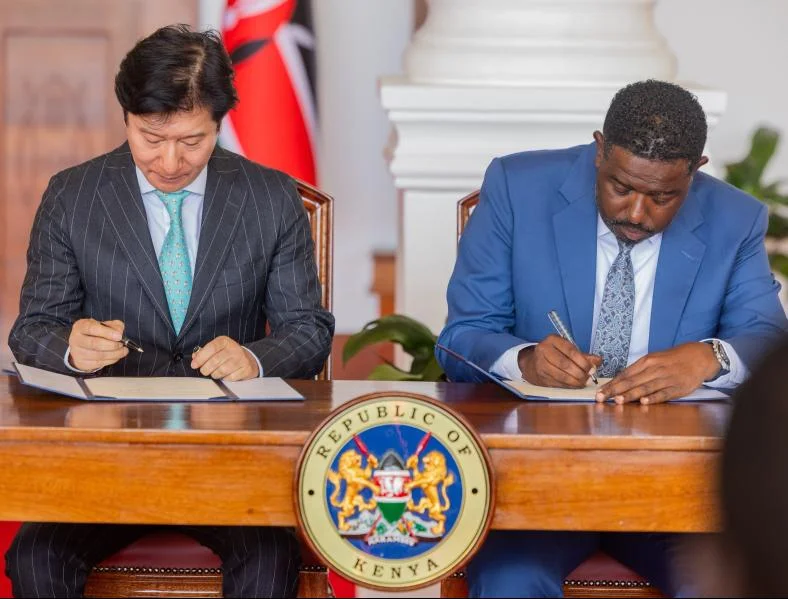
President William Ruto witnessed the signing of a memorandum of understanding between the Kenyan government and Endelevu Enterprise Corporation in Nairobi on October 6, for a proposed integrated electric mobility project involving Chinese automaker Geely.
The plan covers electric vehicle assembly, charging infrastructure and related services. It proposes an assembly plant capable of producing 50,000 four-wheel vehicles annually, alongside a facility for up to 100,000 two-wheelers and light-mobility vehicles a year.
It also includes 1,000 solar-powered charging hubs and a digital platform capable of supporting up to 100,000 electric vehicles.
The scale is ambitious. But the central question for Kenya is not simply how many vehicles the project could produce. It is how much of the investment will translate into lasting economic benefits for Kenyans.
The memorandum of understanding is a starting point, not proof that the full investment has been committed or that the proposed factories will reach their planned capacity.
Financing, construction, production timelines and implementation arrangements will determine whether the project delivers on its promises.
Ruto said the partnership was intended to change Kenya’s relationship with vehicle imports and fuel expenditure.
“For decades, Kenya has imported the fuel that runs our vehicles, and the vehicles that burn that fuel. We have paid for both in hard currency. And with every shipment, we have exported jobs that should have been created here. We are determined to change that equation,” he said.
His remarks reflect a wider economic challenge. Kenya spends substantial amounts on imported petroleum and manufactured goods, exposing businesses and households to international prices and exchange-rate fluctuations.
The Ministry of Roads and Transport, during the launch of the National Electric Mobility Policy in March 2026, estimated Kenya’s annual petroleum import bill at $5 billion.
The ministry said this places pressure on foreign exchange reserves and exposes the economy to global fuel price volatility.
An electric mobility industry could help reduce some of that exposure. But the extent of the benefit will depend on whether Kenya develops domestic manufacturing and services, rather than simply replacing imported petrol vehicles with imported electric ones.
A chance to build more than an assembly industry
For Kenya, the difference between assembling imported components and manufacturing vehicles locally will be critical.
Assembly plants can create jobs and support logistics, distribution and maintenance. But deeper industrial benefits depend on how much production takes place locally, whether Kenyan companies supply components and whether workers acquire skills that can be used beyond a single factory.
Already, Chinese-backed companies are already expanding electric vehicle assembly in Kenya.
These included firms working with Associated Vehicle Assemblers in Mombasa and other manufacturers using Chinese-sourced components.
The proposed Geely-linked investment would expand this emerging industry considerably if implemented as planned.
Ruto said the project would create about 2,000 direct jobs and more than 20,000 indirect opportunities through suppliers, logistics firms and other service providers.
He added that it could generate up to 80,000 further opportunities in fleet management, operations and services.
“These are the kinds of investments that can change the economic fortunes of our country,” he said.
The employment projections are significant, particularly for young Kenyans seeking technical and professional work.
The quality of employment will matter as much as the number of jobs. Kenya stands to gain more if the project includes training for technicians, engineers, software developers, battery specialists and charging-network operators.
Small businesses could also benefit. Local suppliers may find opportunities in vehicle parts, electrical installations, maintenance, transport, software and other services.
But these opportunities will not arise automatically. Procurement policies, supplier standards and access to finance will determine whether Kenyan enterprises participate meaningfully or remain on the margins of a large foreign-backed project.
Ruto said the partnership should deliver more than capital.
“So, what does Kenya expect from this partnership? We expect investment and industrial capacity. We expect jobs for our young people and contracts for our SMEs. We expect technology and skills to be transferred, not just traded,” he said.
That commitment provides a useful benchmark against which the project should be assessed as it develops.
Will electric vehicles become affordable to ordinary Kenyans?
The investment also raises a practical question for households, taxi operators, boda boda riders and public transport businesses: will it make electric mobility more affordable?
Kenya's electric vehicle market has grown rapidly, although adoption remains uneven. Data from Energy and Petroleum Regulatory Authority shows that registered electric vehicles increased from 194 in 2019 to 5,294 in 2024, before reaching 6,442 by June 2025.
The wider market includes motorcycles, buses, three-wheelers and passenger cars. For many Kenyans, the strongest immediate case for electric mobility is economic rather than environmental.
Boda boda riders and commercial fleet operators could benefit from lower energy and maintenance costs, provided that vehicle purchase prices, financing and battery replacement costs are manageable.
A large assembly operation could increase supply and create opportunities for competition. Yet production capacity alone will not guarantee lower prices.
The final cost to consumers will depend on taxes, component imports, financing rates, distribution expenses and after-sales support.
For households considering electric cars, the availability of reliable charging points, spare parts and qualified technicians will also influence purchasing decisions.
The proposed 1,000 solar-powered charging hubs could help address infrastructure gaps. Their value, however, will depend on where they are located, how much they cost to use and whether they are accessible to commercial operators and private motorists.
The government has already identified infrastructure as a challenge. At the launch of the National Electric Mobility Policy in March 2026, the Ministry of Roads and Transport said charging infrastructure remained concentrated in Nairobi and needed to expand to other towns.
If charging facilities are distributed beyond major urban centres, businesses and consumers in other counties could also participate in the transition.
What the investment means for Kenya–China relations
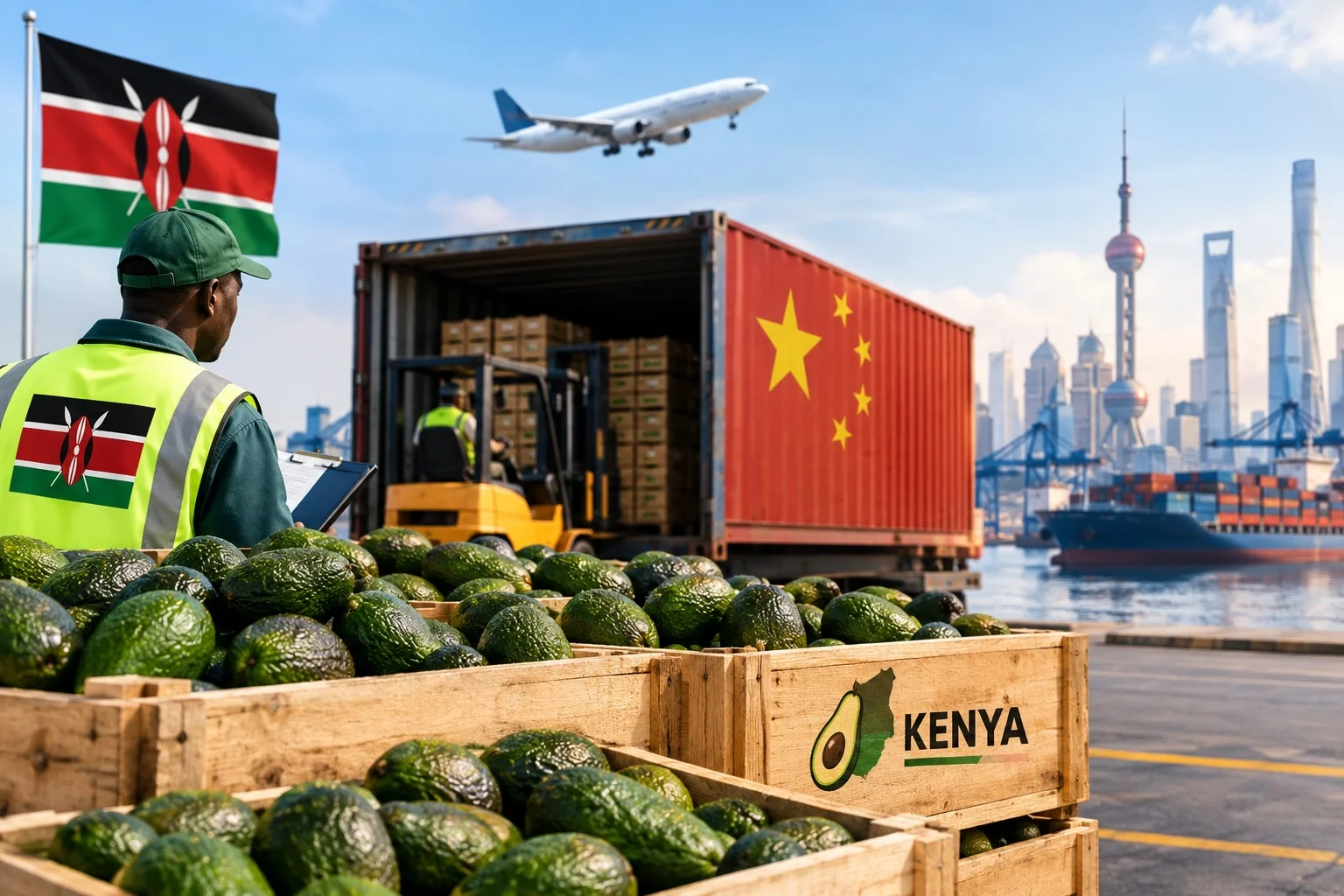
The proposed project is another opportunity to move Kenya–China economic relations beyond the exchange of finished products towards industrial cooperation and skills development.
China has become a major force in global electric vehicle manufacturing. Working with Chinese companies could give Kenya access to established vehicle technology, production expertise and supply networks.
For Kenya, the strategic opportunity is to use that relationship to develop its own industrial capabilities.
This means negotiating for meaningful technology transfer, training, local procurement and the gradual development of Kenyan suppliers.
The partnership must also be commercially sustainable. A factory designed for regional exports needs predictable regulations, efficient logistics, reliable electricity and access to markets.
Ruto said Kenya wanted to serve the wider continent, not just its domestic market.
“To our partners from Endelevu and Geely, our ambition goes beyond Kenya. We do not want to assemble for one market. We want to manufacture for East Africa and for Africa,” he said.
He added that vehicles manufactured locally and meeting East African Community Rules of Origin requirements would be eligible to access the regional market.
That ambition could support Kenya's manufacturing and export goals. But regional access will depend on compliance with applicable rules, competitive prices and the ability to deliver products that meet buyers' needs.
From announcement to implementation
The project also comes as Kenya advances its National Electric Mobility Policy, which seeks to encourage vehicle adoption, local assembly, charging infrastructure and technical skills development.
The government has linked the transition to reduced petroleum dependence, improved air quality and green employment.
There are environmental considerations, too. Electric vehicles can reduce tailpipe emissions, while Kenya's renewable electricity resources offer an advantage in powering transport.
The overall benefits will still depend on how vehicles and batteries are manufactured, charged, maintained and eventually disposed of.
For the investment to deliver lasting public value, transparency will be essential. Kenyans need clarity on financing, implementation timelines, public incentives, local-content commitments and the obligations of each party.
Ruto acknowledged the gap between signing an agreement and delivering a project.
“A signature does not build a factory,” he said, directing the Ministry of Investments, Trade and Industry, through Invest Kenya, to coordinate approvals, land and infrastructure and provide end-to-end facilitation.
That is the immediate test facing the government and its partners.
The proposed investment offers Kenya a chance to create jobs, strengthen manufacturing and build a new export industry with Chinese partners.
But its success should not be measured by the headline dollar value or the number of vehicles a factory could produce.
The more important measures will be the jobs actually created, the skills transferred, the number of Kenyan businesses integrated into supply chains, the affordability of electric transport and the value retained in the domestic economy.
For ordinary Kenyans, the promise will become real only when it translates into accessible jobs, viable businesses and transport that costs less to operate.